

Pickups vs. Defenders: What Does the Taxman Say in 2025
When it comes to technology, there’s certainly no shortage of breakthroughs occurring in the motor industry right now.
But what about how you can fund the purchase of your next vehicle? That’s where my latest handy little guide comes in!
I’m Craig Murray, and I’m here to talk to you about a tax hack that smart business owners and entrepreneurs are using in their thousands in 2025.
What’s changed?
The Autumn Budget was big news in the business world, and with good reason, but something many have missed is the recategorising of a certain type of vehicle. I’m talking here about pickups, and the Ford Ranger is a prime example.
This is a vehicle with a cab that separates the driver and their passengers from the load in the back, and as such, it is now classified as a company car.
Why does this matter? Well, the tax code states that any employer who has bought, leased, or ordered any vehicle that falls into this category will have to pay BiK tax.
BiK is essentially a tax on company cars that has to be paid by the employees, with the exact amount depending on:
- Whether the employee is in the 20% or 40% tax bracket
- The total value of the pickup at the time it was purchased
- CO2 exhaust emissions and the carbon footprint
While this may not be good news for businesses who want to be able to attract and then retain the best and brightest, there is a clever tax move that many businesses are making.
Cars are not commercial vehicles
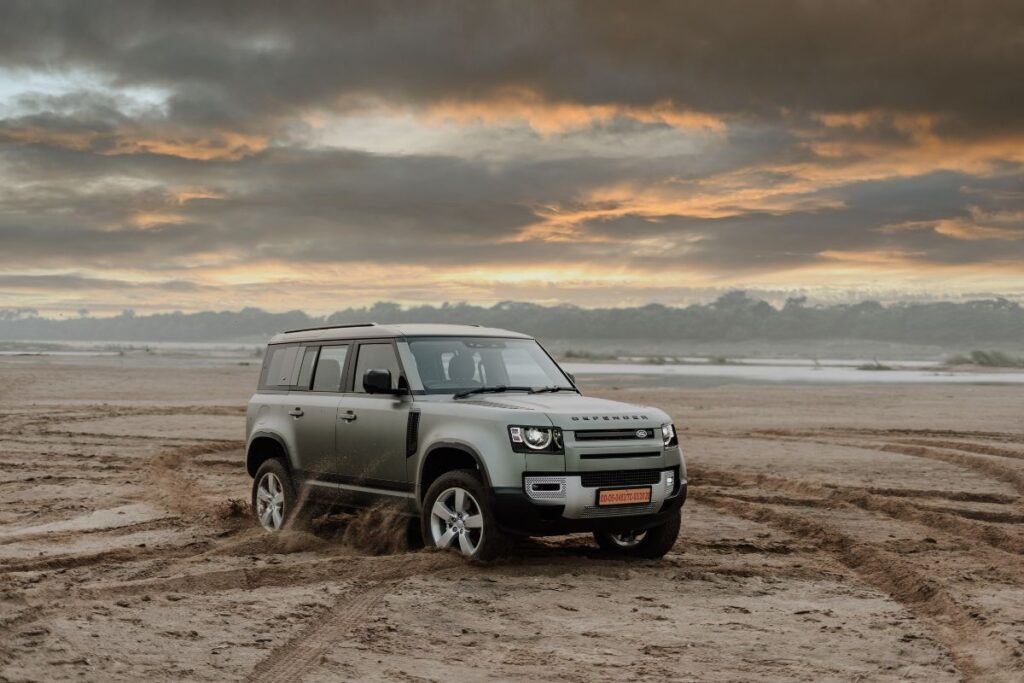
Although it may look quite heavy-duty and industrial, it may surprise you that the Land Rover Defender is classed as a car, not a commercial vehicle.
Even though it is rugged and robust enough to be put to good use commercially, this is not how the tax code views things.
The Defender has a hard top, whereas a pickup is open at the back, and this is where the difference lies.
Because HMRC focuses on the design and construction of the vehicle and not what you may choose to use it for once you have the keys, the designation will not change if you use it as part of your business.
Why isn’t the Defender a commercial vehicle?
If you ask Land Rover, they will tell you that the Defender is marketed as a high-end, lightweight commercial vehicle.
HMRC sees things differently because they are focused on the design and not the intended use:
- Commercial vehicles need to have a payload capacity exceeding more than 1,000 kg
- They also need to have a contained load area that is bigger than the passenger area
The Defender ticks neither of these boxes and, therefore, remains a car in the eyes of HMRC. Good news for those of you who want to make sure your finances go that little bit further.

Can you claim VAT back on the Defender?
Provided you are VAT-registered and you can show that you are using your vehicle for business purposes, you may be able to claim the VAT on your Defender hard-top lease.
The simplest way to do this is to pass the details of your lease to your accountant and ask them to work everything through.
Doing things in this way will ensure that you never fall foul of any of the nuanced grey areas that quickly emerge as you take a closer look at the tax code.
Will things change in 2026?
We can never be certain about which direction HMRC will take things, but all signs indicate that the changes brought in during 2025 will remain in place for the foreseeable future.
This means that you should be able to plan and structure your next vehicle lease agreement in a way that minimises your tax exposure and gets your money doing the work.
Ideal when you want to be able to get ahead by being smarter than the crowd.
Still confused by the changes?
Talking to a trusted vehicle leasing company will help you understand your options and show you what you can get for your money.
You may also find that they speak your language more than a tax advisor does, allowing you to ask the right kinds of questions so that you can quickly bring yourself up to speed.
Perfect when you want a vehicle that is practical and reliable while also making the most of your financial resources.