
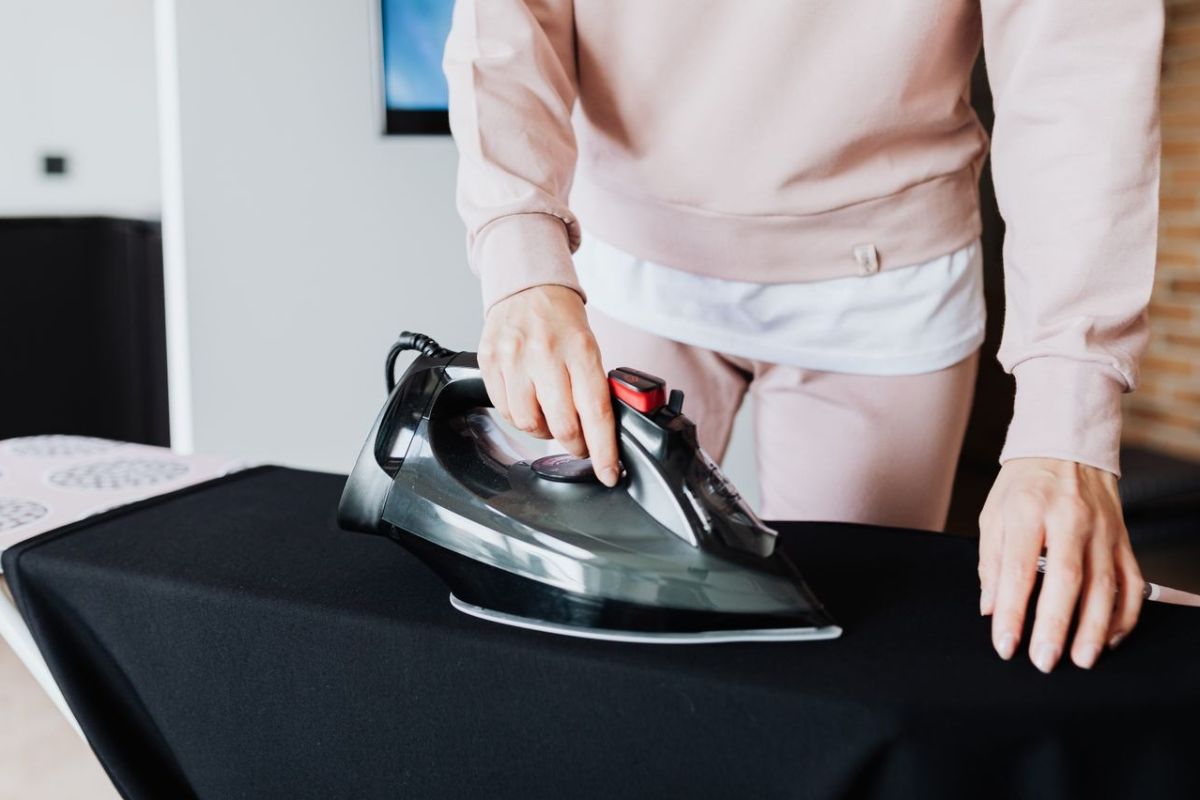
How to iron dark clothes without leaving a shine
You know the shiny patch that turns up on the seat of black trousers or along the crease of a navy skirt? That’s iron shine, and on dark clothes there’s no hiding it. The good news is it’s usually avoidable. It comes down to how hot the iron is and how hard you press, and you control both.
What causes the shine
A matt fabric scatters light because its surface fibres sit at slightly different angles. Press a hot soleplate down hard and you flatten those fibres into one smooth layer, which reflects light back at you. Dark colours just show it up more, because there’s more contrast between the flattened patch and the fabric around it.
Let the steam do the pressing
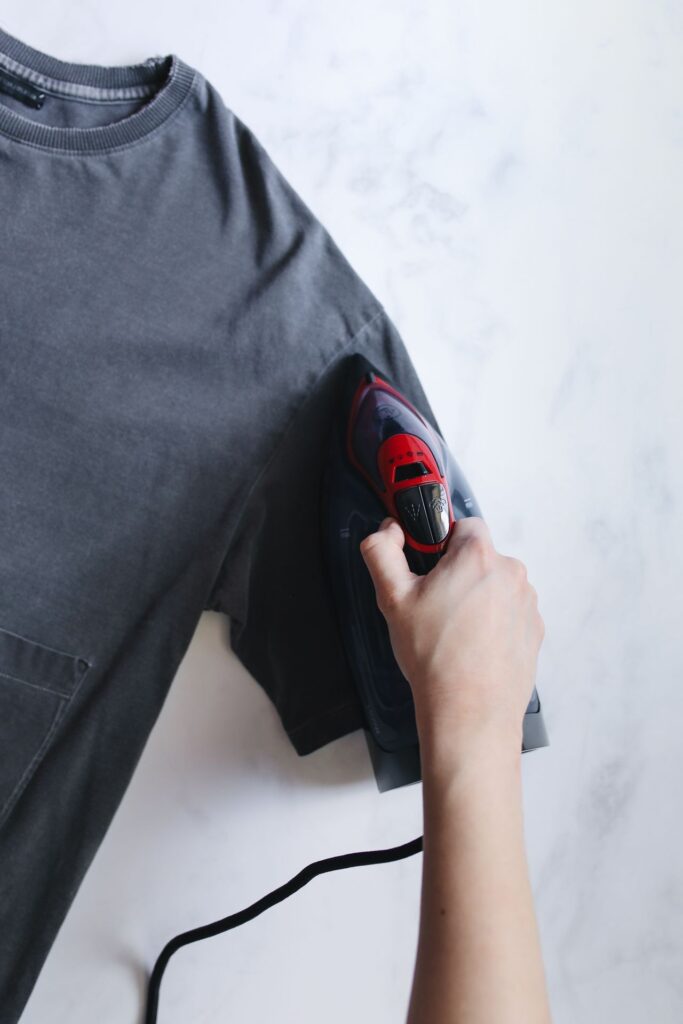
The habit behind most shine is leaning on the iron to push out a stubborn crease. Steam relaxes the fibres so they’ll straighten without force, which is why long, light strokes with plenty of steam work better on dark fabric than pressing down hard.
On a wool skirt or a jacket you often needn’t touch the fabric at all: a burst of steam from just above it, then a smooth with your hand, does the job.
That only works if the iron puts out a steady flow of steam. Steam generators are built for exactly that and run longer between refills, while a standard iron draws on a small tank built into the iron.
If yours runs short halfway through a basket, you’ll end up pressing harder to make up for it. So if you’re replacing your iron, it’s worth browsing ironing products built around a steady supply of steam.
Inside out, with a cloth on top
Which? recommends turning clothes inside out before ironing, because heat on the outer face can leave a slight sheen.
Where that isn’t practical, on a pleated skirt or the front of a jacket, lay a clean pillowcase or a thin cotton cloth over the fabric and iron through it. You can lift a corner now and then to check the crease, and the cloth also stops the soleplate picking up fluff from dark wool.
Trousers are easiest done inside out first, legs flat and seams lined up, then turned the right way round for one light pass of steam through the cloth along the crease.
Cool to hot, then onto a hanger
A lot of shine comes from ironing a delicate fabric on a setting meant for cotton. Do the delicates first (acrylic, nylon and acetate), then silk, wool and polyester on medium, and save cotton and linen for last. The dots on the care label tell you which group a garment belongs to: one dot for low, two for medium and three for high.
Working from cool to hot also saves time, because an iron heats up faster than it cools down.
Once a garment’s done, give it at least five minutes on a hanger before you put it on, so the press has time to set.


