
The Rise of AI Writing Tools
Writing tools driven by artificial intelligence (AI) mark a radical change in the creation of material.
With applications like ChatGPT, a quick prompt allows you to produce articles, essays, emails, and more churned-out in seconds.
This technology promises to democratise writing by making it cheap, quick, and simple. But it also dramatically calls into question what is now becoming plagiarism and the fate of human writing.
In this article, we dive into the promise and peril of AI writing.
The Promise: Faster, Cheaper Writing
For writers, small businesses, agencies and enterprises, AI promises a host of benefits:
Speed
AI tools draft, revise, rewrite and format in minutes instead of hours or days. What really increases writer productivity is this accelerated content creation.
For example, as an author, you can get accurate results with Smodin’s plagiarism checker in just a few seconds and immediately correct the text if any matches are found.
Cost Savings
By lowering reliance on costly human writers, automated writing helps to save expenses. An AI assistant might, for example, complete three authors’ worth of work.
Customisation
Customised writing with AI tools is tailored to a particular tone, style, and personality. Personalised communication is powered by this adaptability.
Consistency
Documents created by AI stick to consistent terminology, style and branding. This uniformity builds organisational trust.
Accessibility
The ease of generating content makes capable writing available to more people and organisations. AI democratises communication.
Together, these strengths make AI-powered writing flexible, affordable and fast – giving creators a potent new tool. Early adopters in marketing, online media, and other fields report stunning results.

The Perils: Plagiarism and Dehumanization
However promising, AI writing also poses hazards:
Plagiarism
Every text that an AI model generates inevitably reuses the same phrases and passages that are common on the web.
It threatens to duplicate originality and makes plagiarism a structural possibility, not an exception.
Dehumanisation
Algorithms take the creative and emotional connection out of communication and rely on them. It puts a risk of writing generic, lifeless or inaccurate.
Unemployment
If businesses swap human-written content for AI-generated text to cut costs, many writers could lose jobs or income. This continues automation’s disruption of industries.
Bias and Toxicity
Online text is what is used to train models, meaning that they are susceptible to absorbing and amplifying their own biases and toxicity.
If you use AI writing irresponsibly, it will normalise discrimination. If these drawbacks are ignored as the AI generation develops, scholars fear they will fundamentally destroy public discourse.
Key Players Shaping the AI Writing Landscape
AI writing tools are accelerating into the mainstream, thanks to venture investment and intense competition among tech giants.
Key players driving development include:
- OpenAI – This research nonprofit offers ChatGPT, the viral chatbot that kicked off the AI writing boom in late 2022. Backed by $14 billion from Microsoft as of 2024.
- Google – Recently demoed conversational AI tool Bard (now Gemini) to counter ChatGPT. Vast data for training AI gives Google an edge.
- Microsoft – Pouring resources into AI including $14 billion invested in OpenAI. Building AI directly into Office Suite and LinkedIn.
- Amazon – Making AI content tech a priority. Owns Alexa voice assistant. Recruiting AI experts to counter OpenAI momentum.
Additionally, startups like Anthropic, You.com, and Jasper.ai are pushing new natural language models.
Over the next ten years, artificial intelligence promises to transform corporate and creative writing as usage spreads.
Writing in an AI World: Key Considerations
We should be extremely careful in the ethical and efficient use of AI writing tools, given their ongoing development and rising use.
These tools promise to help original human writers generate ideas and draft first drafts when it comes to originality.
However, the problem with relying too much on AI is that it can make writing generic, derivative, or lack any distinctive voice.
Any AI support that human writers should be using should be focused on enhancing creativity, imagination and perspective – not replacing it.
It is vital to review AI output deeply and thoroughly to refine and polish your distinct personal style and viewpoint.
AI offers a great potential to increase the output significantly from the writer’s perspective.
Using it as a crutch won’t make it bad over time, but if you use it as a crutch, you’re going to start to lose writing quality, emotional impact, and uniqueness.
The trick is to get this technology to help and supplement human skills, not displace them. Writers need to define clear complementary roles for human craft and AI efficiency in order to use these tools effectively while keeping what is most important about their voice.
Ethics plays a part when one considers AI writing as the writers have some pitfalls towards perpetuating bias, spreading misinformation and engaging in plagiarism, which they should take into cognisance.
Instead of taking AI content at face value, human writers need to enforce high standards for fairness, truth and due attribution to protect standards for fairness, truth and due attribution.
This involves examining output to fix any broken parts, removing any unfair bias, and making sure we credit our sources properly.
With proper handling, artificial intelligence writing aids have great potential. We have to develop a culture of human responsibility and knowledge instead of allowing tools or efficiency to make choices by themselves.
Developing artificial intelligence writing support that highlights the best in human communication rather than undercuts it depends on this moral understanding and duty.
Implications for Writers and Content Creators
For writers already stressed about income insecurity and lack of protections, AI brings new career uncertainty.
Possible implications include:
- Reviewing, editing, and managing AI content at scale now fall underwriting support jobs.
- As AI makes vast swaths of content cheap and reusable, increasing freelance competition on price for bulk, formulaic text becomes less relevant.
- Top talent focusing more on idea generation and high-value analysis is less vulnerable to automation.
- Lack of control over the originality of output since artificial intelligence recycling increases unintentional duplication difficulty avoidance.
- Pay is under general downward pressure as demand moves to AI-augmented authors, which are able to produce more.
In this climate, human writers may need to reposition their skills while asserting the value of their voice, perspective and judgment. There are certain to be growing pains for the profession.
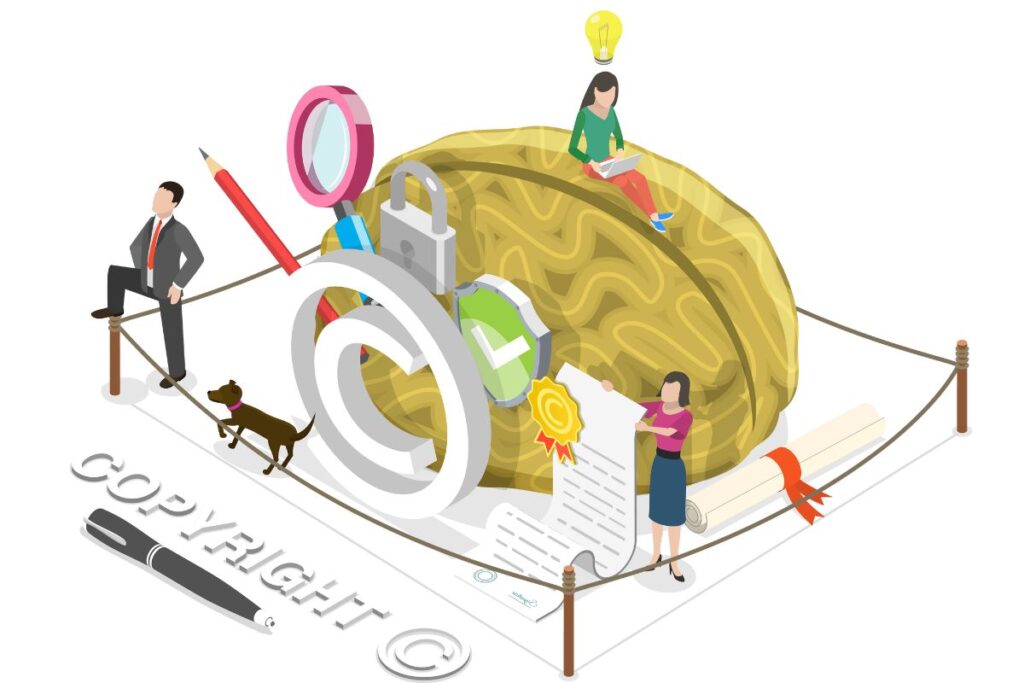
Plagiarism Challenges
AI models represent an unprecedented plagiarism machine – ingesting millions of online documents, remixing extracts into new permutations, recycling and repurposing without attribution.
This raises copyright concerns and undermines a basic ethical standard of giving credit for words borrowed or copied. Challenges for writers include:
- Burden of plagiarism detection shifting from people to algorithms
- Duplication becoming systemic rather than an individual fault
- Lack of transparency around how AI systems summarise, paraphrase and synthesise source text
- Legal uncertainty about whether excerpting without quotes or attribution qualifies as fair use
Pushback from creators, the media and academics argues this infringement-by-design requires better solutions as AI writing goes mainstream.
Startups are responding by already advertising plagiarism detection tools for artificial intelligence articles. New attribution rules might arise whereby one cites an artificial intelligence tool plus source data.
In the end, guidelines created for human-written content do not quite match the AI generation working under distinct industrial norms.
With technology increasing, it is time to rethink policy and best practices to strike a balance between the interests of creators, corporations and the public.
Recommendations for Healthy AI Writing
Mediocre AI writing tools are already here, and developing the full promises of AI writing tools while navigating their pitfalls is going to be a matter of creating new creative disciples and ethical norms.
Setting accurate user expectations around accuracy, fairness and originality are the beginning of responsible development with AI.
In addition, it calls for the establishment of industry standards and best practices aimed at transparency, ethics and attribution.
We also need to architect future systems so that human writers remain in control of their outputs, and AI helps them, but without taking creative direction and accountability away from them.
Training on more diverse sources — the more to choose from, the better, but not necessarily more toxic — also remains crucial at improving underlying data and models.
Using AI day to day is healthiest as a collaboration tool for writing tasks that humans can’t, not as a replacement for human effort or oversight.
In that instance, AI can still process draft portions during editing, yet it still needs to be credited correctly to the original source materials and inspiration.
In the end, it is the humans behind the keyboard that need to take responsibility for AI writing assistance — actively reviewing, revising and approving the final outputs.
It ensures ethical ground while exploring the potential of AI to strengthen human communication instead of tearing it apart with bleeding of quality, accuracy and authorial responsibility.
If we keep people at the centre of writing augmented by tools, we can get closer to AI-augmented creativity that works with, rather than against, the best of human intellect and expression.
Conclusion
Advanced AI writing systems are suddenly growing, and tensions between empowerment and displacement, originality and plagiarism are emerging. To realise the full promise, we will need to change attitudes, policies and safeguards.
Algorithms can improve communication without degrading it with ethical standards, creative vision and human oversight. AI can unlock new horizons by keeping people at the centre of writing.