
The Rise of Decentralised Networks and What They Mean for Online Freedom
The Internet began as a decentralised system designed to survive attacks and continue operation even if parts of it failed.
It was created in the late 1960s, as ARPANET, to connect research institutions without a single control point.
This original vision promised a network where information could flow freely and no single authority could shut down the entire system.
The underlying infrastructure remains decentralised today, but our daily online experience has become more centralised.
This happened through several key developments. The DNS (Domain Name System) introduced centralised management of domain names, like .com and .org, in the 1980s.
The Internet backbone infrastructure created major service providers that became central points of control. Most significantly, digital gatekeepers emerged over time.
Companies like Google, Facebook, and Amazon now control enormous amounts of power over data and communication.
Most people access the Internet through these handful of major platforms, which control much of what we see, share and access online.
What is a Decentralised Network and Why are They Gaining Popularity?
A decentralised network is an Internet structure that works without any governing authority directing its operations.

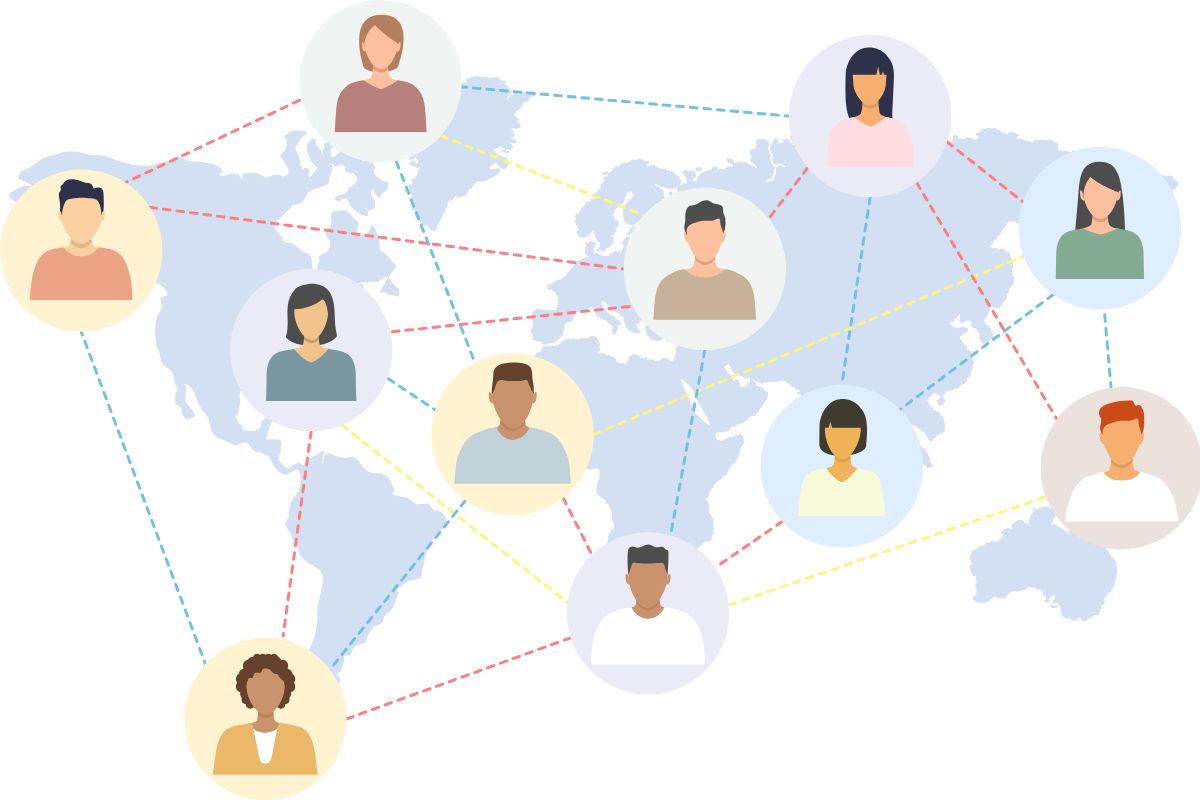
Rather, it relies on a peer-to-peer (P2P) system where data and functions are spread across several contributing nodes.
In decentralised networks, data and roles are not stored and controlled from central servers. Think of it as a government with no overarching leaders—one where everyone has equal power.
The decentralised framework ensures that one party doesn’t have full control over the network; this democratic framework makes a network less susceptible to misuse, downtime, and censorship.
There are several key factors responsible for the rise of decentralised technologies, so let’s look at a few of them.
Growing Distrust in Centralised Platforms
Over half of the world’s population performs most of their daily activity online.
These activities generate a lot of data that captures information about the user, such as their age, occupation, academic background, interests, and spending habits. Where does this generated data go? The server of centralised networks.
In recent years, there have been several concerns concerning consumer data. These concerns include data breaches by hackers where stored data was exploited, excessive surveillance by corporations, and content privacy issues.
Also, arbitrary content moderation, where social media users receive shadow bans due to their content ideologies, contributes to the rising distrust Internet users have in centralised networks.
Demand for Digital Sovereignty and Protection From Political Pressures
With the growing awareness of online identity and privacy, more people are seeking platforms where they can have true control over their online data and content. Also, there are regions where complete Internet freedom is still a myth.
Decentralised networks offer people in these regions a way to bypass censorship and communicate freely without fear, as well as allowing them to curate their own feeds without being ‘forced’ to see certain content and advertisements.
The Need to Catch Up Technologically
Take the international banking industry, for instance, traditionally, sending money overseas is not an instant transaction. It may take hours or even a few days.
However, thanks to blockchain technology, a system that runs on a decentralised network, such transactions could be instant.
Aside from international banking, one can build platforms without excessive regulatory censorship.
These, and more technological advancements, are made possible through decentralised systems like ledgers, smart contracts, and cryptography.
What Sectors are Currently Using Decentralised Networks?
Decentralised networks are no longer lab experiments waiting for a breakthrough; they’re already in use in various sectors of everyday life. Let’s look at a few of these areas.

Data Storage and File Sharing
Data storage is gradually becoming more open to decentralised technologies, such as the Interplanetary File System (IPFS). Storage and file sharing work hand in hand, and that’s where platforms like Filecoin and BitTorrent provide censorship-resistant options online.
Content Creation and Publishing
Censorship has been a major drawback for creators on traditional content-sharing platforms.
However, decentralised platforms like Audius provide an open platform for music creators to share their content without fear of strikes.
In recent years, content creation has become a full-time job, giving creators the opportunity to earn from their online activities.
Decentralised networks have enabled creators to earn directly from their audience without being shortchanged by middlemen (centralised content-sharing platforms).
Online Casinos
While many online casino players spend leisure time on games, they also fancy identity protection and data security. Interestingly, decentralised networks appear to offer these features better.
Player data doesn’t go to a central location where it can be breached, and players can play under anonymity. Also, funds can be locked away using complex cryptographic security.
Other areas integrating decentralised networks into their operations include the financial sector, social media, healthcare, and logistics, among others.
What Do They Mean for Online Freedom?
There’s no doubt, decentralisation comes with a few benefits for Internet users. They include greater data privacy and anonymity for users and empowerment for communities under excessive censorship.
This is not to mention the open access previously checked by centralised gatekeepers. With decentralised systems, only an Internet connection is needed in order to reach the ends of the earth.
The microblogging social media service, Bluesky, has seen great success since its launch in 2024.
This is partly due to the fact that it is decentralised and allows users to create their own custom feeds without being forced to see adverts and content they may wish to avoid.
Despite these benefits, there are certain drawbacks, such as difficulty in managing harmful use of access.
The Silk Road marketplace, where illegal transactions took place, is an example of what happens in a space without adequate regulations.
There’s also the case of regulatory grey areas, as governments are seeking ways to manage the leaderless and borderless nature of these networks.


