
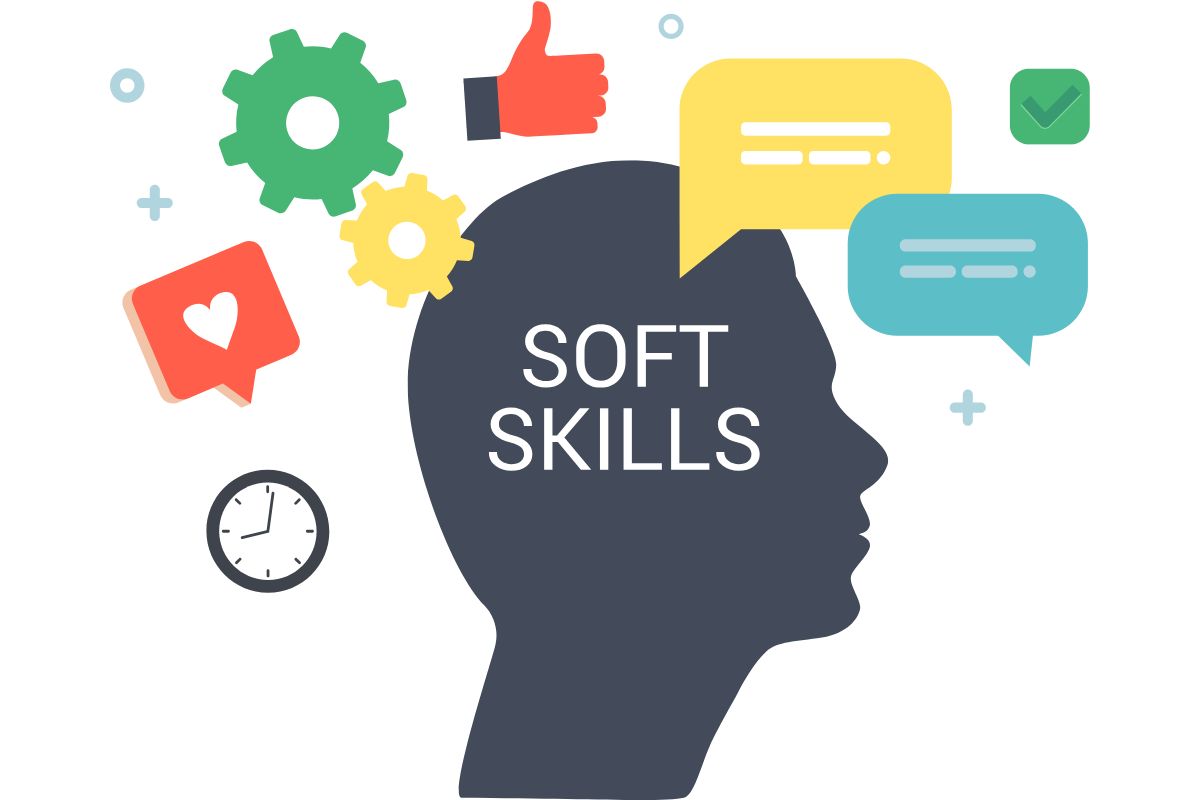
Why Soft Skills Are the Future of Work: Bridging the Human-AI Divide
Why Soft Skills Are the Future of Work: Bridging the Human-AI Divide
Machines are taking over more and more technical jobs due to the meteoric ascent of AI and its deeper integration into manufacturing processes.
This begs the question: where do humans fit in an increasingly automated world? Although AI is fast and can analyse large amounts of data with remarkable accuracy, it still can’t mimic human emotions, intuition, and adaptability that define human interaction.
Uniquely human abilities—often called “soft skills”—are emerging as a key competitive advantage for both businesses and employees.
This shift has led to an increased focus on soft skills monitoring, ensuring that human strengths remain a priority in a tech-driven workforce.
But why are soft skills gaining such importance in the age of technological advancement?
AI’s Capabilities are Vast — but Some Skills Will Always Be Uniquely Human
Artificial intelligence is capable of smoothly handling a wide range of jobs like content generation, customer assistance and communication, coding, and large data analysis.
However, there are certain jobs that will always need a human touch.
The Human Edge in Creativity
While AI can help with certain creative tasks, only humans are capable of genuine creativity for various reasons.
First, it often requires emotional intelligence, sensitivity, and intuition, in addition to creative problem-solving and the ability to perceive relationships where none existed before.
Every person’s creative work is one-of-a-kind since creativity is often influenced by one’s own cultural background and personal experiences. Currently, AI isn’t excellent at understanding these nuances.
Decision-Making Beyond Data
The human element will always play a pivotal role in leadership and strategic management.
A person’s connections or the company’s culture are two of many aspects that could influence their decision-making process.
A human being has a wide range of attributes, including the ability to see the big picture, trust their gut, communicate effectively, and comprehend situations that go beyond hard statistics.
Just have a look at any well-known CEO, like Elon Musk, Steve Jobs, or any numbers guy. There is more to their accomplishment than just cold, hard numbers.
Interpersonal Communication
Artificial intelligence (AI) still lacks the capacity for empathy that humans have, although it is making great strides in this direction.
Artificial intelligence can’t have meaningful conversations with your employees, solve their issues, or be there for them when they need someone to talk to.
Leading a group of people requires you to communicate with them, hear what they have to say, and figure out what drives them.
Making sure everyone understands each other requires a personal touch. The responsibility of “connecting the dots” will presumably continue to rest on humans.
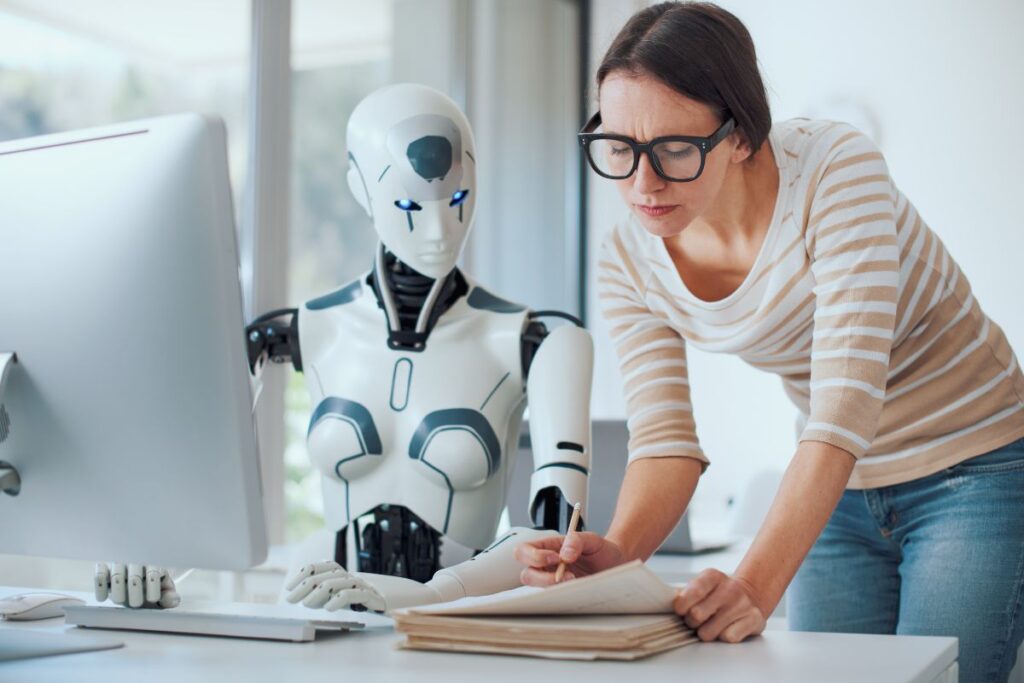
AI Requires Human Supervision
Even if AI has the potential to out-process humans in certain areas, humans will still need to use their critical thinking abilities to ensure that AI is properly monitoring data and correcting errors as they occur.
For example, consider your bank account. Even though an automatic system could alert you to an overdraft, only the human owner of the account can determine whether this is a genuine worry or just a false alarm.
Additionally, the account holder would want to speak with a live person who can empathise with their predicament and take appropriate action to ascertain the source of the issue.
A good banker will not only assess the situation but will also provide an apology and work to resolve the issue.
Ethical Decision-Making
Decisions in a highly competitive corporate setting sometimes need ethical considerations.
Humans possess the inherent flexibility to manoeuvre around moral difficulties, in contrast to AI, which relies on algorithms and data patterns.
Many people have been talking about how machine learning (ML) can teach AI empathy. However, soft skills monitoring ensures that organisations continue to emphasise the human role in making ethical decisions.
Humans will continue to bear the burden of making moral and ethical judgements until this becomes a reality—something that may never fully happen.
Conclusion
While AI is revolutionising the workplace, it is also drawing attention to the value of our human qualities.
Machines are great at doing mundane jobs, but they lack the human capacity for leadership, imagination, creativity or emotional intelligence.
Success in the future will go to businesses that prioritise investing in their staff’s soft skills in addition to their technology.
The future of AI and humans is dependent on our ability to combine human capabilities with technical developments.


