
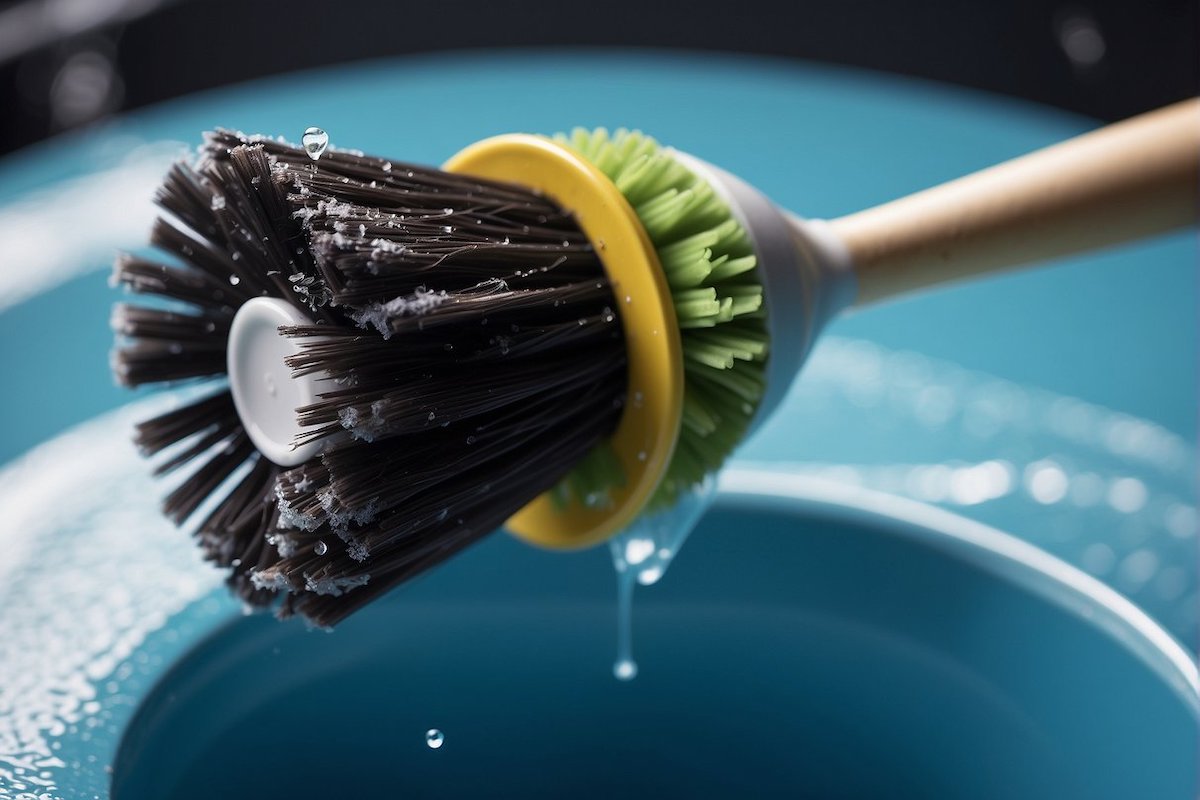
How to Remove Limescale from Toilet Below Waterline
Knowing how to remove Limescale from toilet below waterline is not that difficult if you have the right tools and knowledge.
If you’ve noticed a chalky, white residue in your toilet bowl, that’s limescale caused by hard water.
This mineral-heavy water leaves deposits that can become tough to clean over time.
Cleaning the toilet is rarely a glamorous task, but addressing limescale is necessary to maintain a fresh and hygienic bathroom.
You’ll be pleased to learn that you can restore your toilet’s shine using some household essentials.
A touch of patience and the correct cleaning agents will have your toilet looking brand-new in no time.
Whether you are gearing up for a full bathroom clean or just looking to maintain the daily sparkle, removing limescale doesn’t need to be an arduous task.
The satisfaction of a gleaned toilet bowl free from limescale is well worth the effort.
So roll up your sleeves—let’s get your toilet back to its pristine condition.
How to Remove Limescale From Toilet Below Waterline
Removing limescale from below the waterline in your toilet can be achieved with a couple of effective household items.
Let’s look at the specific ways you can use vinegar and baking soda to tackle this common bathroom cleaning challenge.
Vinegar Solution
First, you’ll need to gather undiluted white vinegar.
Pour one liter of white vinegar into the toilet bowl, ensuring that it fully covers the limescale deposits.
Allow the vinegar to sit for 3-4 hours to break down the limescale.
Afterward, scrub the area with a toilet brush to remove the vinegar-loosened deposits, and then flush the toilet.
Baking Soda Technique
For the baking soda method, sprinkle one cup of baking soda directly onto the limescale in the toilet bowl.
Allow it to sit for approximately 30 minutes.
Then, pour two cups of white vinegar into the bowl; it will fizz as it reacts with the baking soda.
Once the fizzing stops, scrub the area with a toilet brush and flush away the residue.
Chemical Removal Techniques
When tackling limescale below the waterline, you can use chemical solutions that are specifically formulated for this purpose.
These products can effectively dissolve limescale deposits, leaving your toilet looking clean and fresh.
Commercial Limescale Removers
Commercial limescale removers are specially designed chemicals that can swiftly deal with limescale accumulation.
Here’s how to use them:
- Read the label: Always follow the manufacturer’s instructions for safety and best results.
- Apply the remover: Carefully apply the product below the waterline and on any affected areas.
- Wait: Give it the necessary amount of time to work, as stated on the bottle.
- Scrub if needed: Some products may require scrubbing with a toilet brush.
- Flush: Finally, flush the toilet to rinse away the chemicals and limescale.
Tip: Always use gloves and work in a well-ventilated room when using chemical removers.
Applying Chemical Solutions
If you prefer a more hands-on approach with readily available household items, you could use the following method:
- Vinegar and Baking Soda: These common household items are great for cleaning various surfaces, including removing limescale from your toilet.
Steps:
- Pour 1 litre of white vinegar into the bowl, making sure to cover the stains.
- Add a cup of baking soda to the vinegar in the bowl.
- Allow the mixture to fizz and leave it to sit for several hours or overnight for thorough action.
- Scrub the area with a toilet brush to remove the limescale.
- Flush the toilet to clear out the mixture and loosened limescale.
Always remember to check the compatibility of any product or solution with your toilet’s material to prevent any unintentional damage.
Preventive Measures
In maintaining a clean toilet and minimizing limescale buildup, focusing on prevention is just as crucial as addressing existing issues.
By adopting regular cleaning routines and considering water-softening solutions, you can effectively keep limescale at bay.
Regular Cleaning Routines
To prevent limescale from taking hold in your toilet bowl, incorporate weekly cleaning into your schedule:
- Use an Acidic Cleaner: A mild acid like vinegar can help to discourage limescale deposits.
- Simply pour a cup into the toilet bowl once a week, leave it for an hour, then scrub with a toilet brush and flush.
- Frequent Brushing: A quick scrub with a toilet brush every few days can stop limescale from hardening and becoming difficult to remove.
Water Softening Solutions
Hard water contributes to limescale accumulation; softening your water can significantly reduce this:
- Install a Water Softener: This device treats your water by removing minerals that cause hardness, which in turn, decreases limescale formation.
- Use Softening Tablets: These are dropped into the toilet cistern, releasing substances that soften water and prevent limescale.
- Follow the instructions on the product for proper usage.
Key Takeaways
- Vinegar Soak: Apply white vinegar to combat limescale.
- Soak paper towels in vinegar, then place them below the rim or directly on the limescale.
- Leave it overnight for effectiveness.
- Gentle Scrubbing: The following day, gently scrub the area with a stiff-bristled brush to remove the limescale.
- Take care to rinse thoroughly afterwards.
- Safe Abrasives: Should the limescale persist, use fine-grit sandpaper cautiously.
- Apply it with light pressure to avoid scratching the porcelain.
- Preventive Measures: Regular cleaning with vinegar can prevent future limescale build-up.
- Pour vinegar into the bowl to cover stains, let it sit for 3-4 hours, then scrub with a toilet brush.


